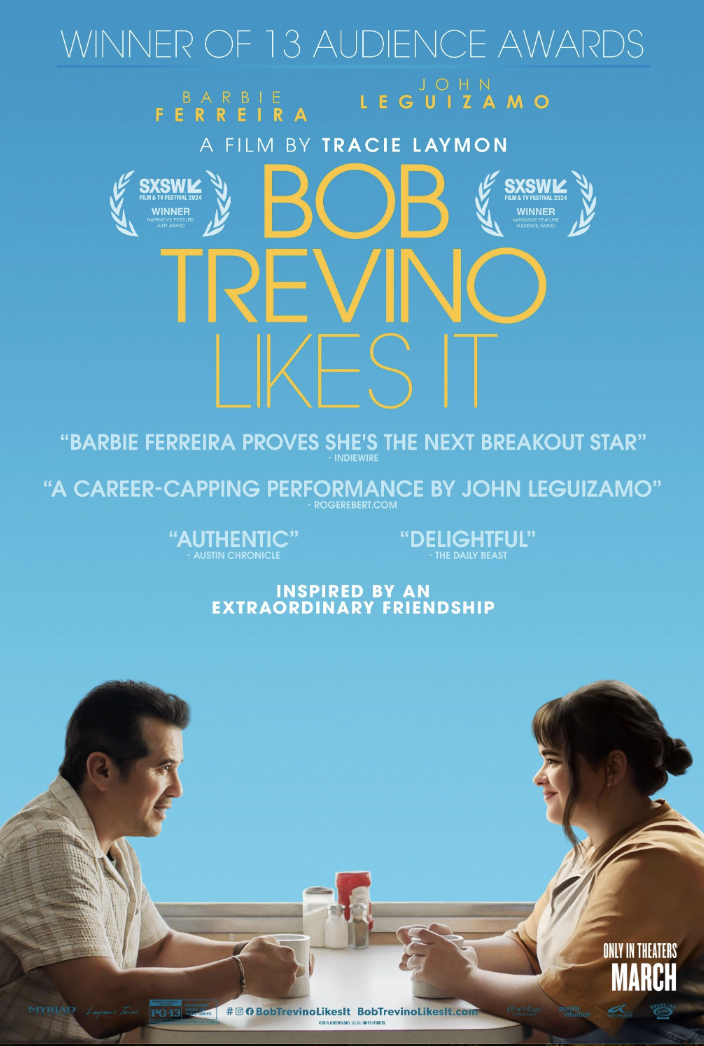


Bob Trevino Likes It
Matt Zoller Seitz
“Bob Trevino Likes It” is an example of what some people have called “Nicecore,” a work of art that stresses kindness, generosity, empathy and other positive behaviors and doesn’t undercut them with irony or cynicism. The main character, Lily Trevino (Barbie Ferreira), is a 25-year-old home care nurse whose father Bob (French Stewart) is a raging narcissist, the kind of guy who sits across from his daughter at lunch as she spills her heartbreak and barely looks up from the iPhone he’s using to determine which blonde from his senior community to date next. Lily’s mother, an addict, deserted the family when Lily was very young, and even though her dad stepped up, he openly resented Lily and treated her as more of a burden than a daughter. He’s about as irredeemable as a movie dad can get without committing crimes.
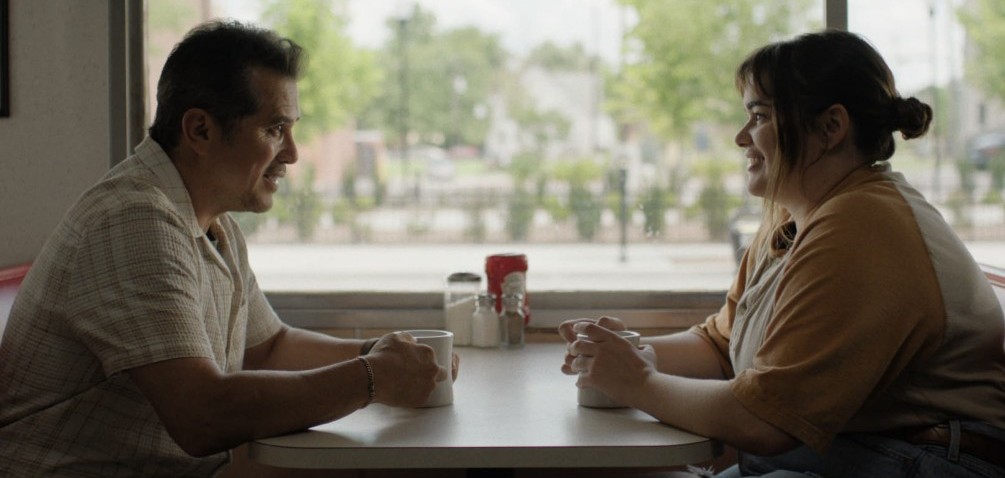
Then the two have a fight and Bob impulsively decides to cut Lily out of his life, even blocking her on Facebook. When Lily, who thinks her dad simply unfriended her, tries to reconnect with him on the app, she types “Bob Trevino” into the search bar and comes up with several matches that aren’t her father and one that has no avatar. That’s the one that she sends a new friend request to. The account belongs to a different Bob Trevino, played by John Leguizamo. This Bob is the sort of man Lily always wanted for a dad. He’s kind, responsive, a great listener, wise, honest, a fan of corny jokes, and reflexively “likes” every social media post she puts up. When Lily’s client’s toilet overflows right before she’s supposed to have her first meeting with new Bob at a diner, she impulsively calls and asks him for help. Not only does he show up quickly and fix the toilet, he takes her to a hardware store to shop for necessities that her biological father never told her she needed.
You might be reading this thinking, “I wish life were like this.” I was thinking the same thing all through “Bob Trevino Likes It” because I didn’t read the press notes before the screening (I generally avoid doing that because I like to have as fresh a response as possible). Turns out the film’s writer and director, Tracie Laymon, is telling a strange but true story that happened to her but changing key details because, as she explained at a SXSW screening, she didn’t want to get sued by her biological father.
What about Bob, though? We’ve been conditioned to expect that no nice person that we meet in fiction can possibly be just nice: they invariably turn out to have some dark secret or be hypocrites or con artists or worse. That’s not the case with the other Bob. He’s exactly as advertised. It’s a career-capping performance for Leguizamo, a versatile performer who has often been cast as eccentrics, grotesques, and villains but has rarely been given the chance to rise to what some actors consider the ultimate challenge: playing a main character who’s a genuinely good person and keeping him interesting. This is Tom Hanks-caliber sunshine-and-lollipops acting.
There’s no point pretending this is a perfect work of cinematic art or that parts of it don’t seem contrived or not-fully-baked despite the fact that it’s rooted in reality. Bob’s wife Jeanie, played by Rachel Bay Jones, is an adoring lady who’s into scrapbooking, but lacks dimension beyond that, and she struck me as too immediately accepting of her husband running off to meet a 25-year-old woman that he met online. There are a few scenes that verge on cute, in a ’90s Sundance indie comedy sort of way. But any complaints I might have about “Bob Trevino Likes It” are minor in the greater scheme. Like “Paterson” and “Field of Dreams,” this is the kind of movie that will make certain viewers roll their eyes but inspire others to see it multiple times in a theater, just to have that great feeling again.
Festival Details
Special Guest(s)
Q&A Co-Hosts
Release Date: 2024
Cast & Credits
Rated PG-13
Written and directed by Tracie Laymon
Barbie Ferreira as Lily Trevino
John Leguizamo as Bob Trevino
French Stewart as Robert Trevino
Running time: 101 minutes
DCP courtesy: Roadside Attractions